
To all my loved ones, cheers ♥
Theme adapted from orderedlist
Distributed Lease 101 and How To Localize Linearizable Reads
07 Jul 2026 - Guanzhou Hu
Leases are a powerful and widely-used primitive in distributed systems, but what are they really? Let’s understand learn how leases work and, through a pleasant journey, learn how to apply leases to optimize linearizable consensus reads. We will derive the Bodega protocol at the end – the state-of-the-art protocol that allows linearizable read at any client-nearest replica (anywhere) with minimal write interruption (anytime).
Lease, and What to Expect?
A lease is a directional, time-bounded, refreshable promise: one node (the grantor) promises another (the grantee) that it will uphold some rule until expiry.
Let’s walk through how leases work, and how to apply leases to optimize wide-area linearizable read on a replicated consensus cluster:
- One-to-one – the primitive: a safe promise between two nodes.
- Lease manager – one node distributes a promise out to many.
- Leader Leases – everyone leases the leader, producing a stable leader who can local read.
- Quorum Leases – everyone leases a subset of local readers in the absence of writes.
- Roster Leases – everyone exchanges leases on the roster: a free side-channel agreement.
- Bodega protocol – co-designs roster leases with consensus: read anywhere, anytime.
For a better version of this walkthrough, visit https://bodega-consensus.com. Prefer hands-on exploration? Try our distributed lease simulator playground.
01. Standard One-to-One Leasing (one-to-one)
The base primitive: one grantor promises one grantee.
One invariant holds at all times: the grantor expires the lease no earlier than the grantee does, so the grantee never believes on a lease the grantor has dropped.
Lease only requires bounded clock drift between the two sides, i.e., the speed of time flowing does not differ by more than t_Δ.
How do we hold the invariant true without synchronized timestamps? Via messages. Two phases:
- Guard (once). Tames the unknown delay of the first message – the grantee accepts the first renewal only inside a self-imposed window, letting the grantor bound expiry before any reply.
- Renew (steady state). The lease starts on the first renewal (if received timely before guard expiry); a renew exchange loop at sub-timeout intervals keeps the lease alive.
Example – Lease established and kept alive:

Example – Guard msg/reply missing, not established:

Lease ends at either when the grantor proactively revokes it, or when renewals don’t arrive before expiry – the expiration mechanism makes lease failure-resilient.
Example – Proactively revoked by grantor:

Example – Failure on the link, lease expires:

Notice the grantor-side timer dance: every renewal it sends pessimistically extends grantor’s expiry (in case the reply never comes back), and upon receiving the reply it tightens expiry calculation back to the confirmed receipt.
02. The Lease Manager Pattern (one-to-many)
A common way to deploy the primitive in a distributed system is to have a dedicated lease manager entity that holds the authority to grant leases, handing them out to nodes as they request them. Each grant is just an independent instance of the one-to-one primitive.
Example – Manager hands grants to 1,2 then 2,3:
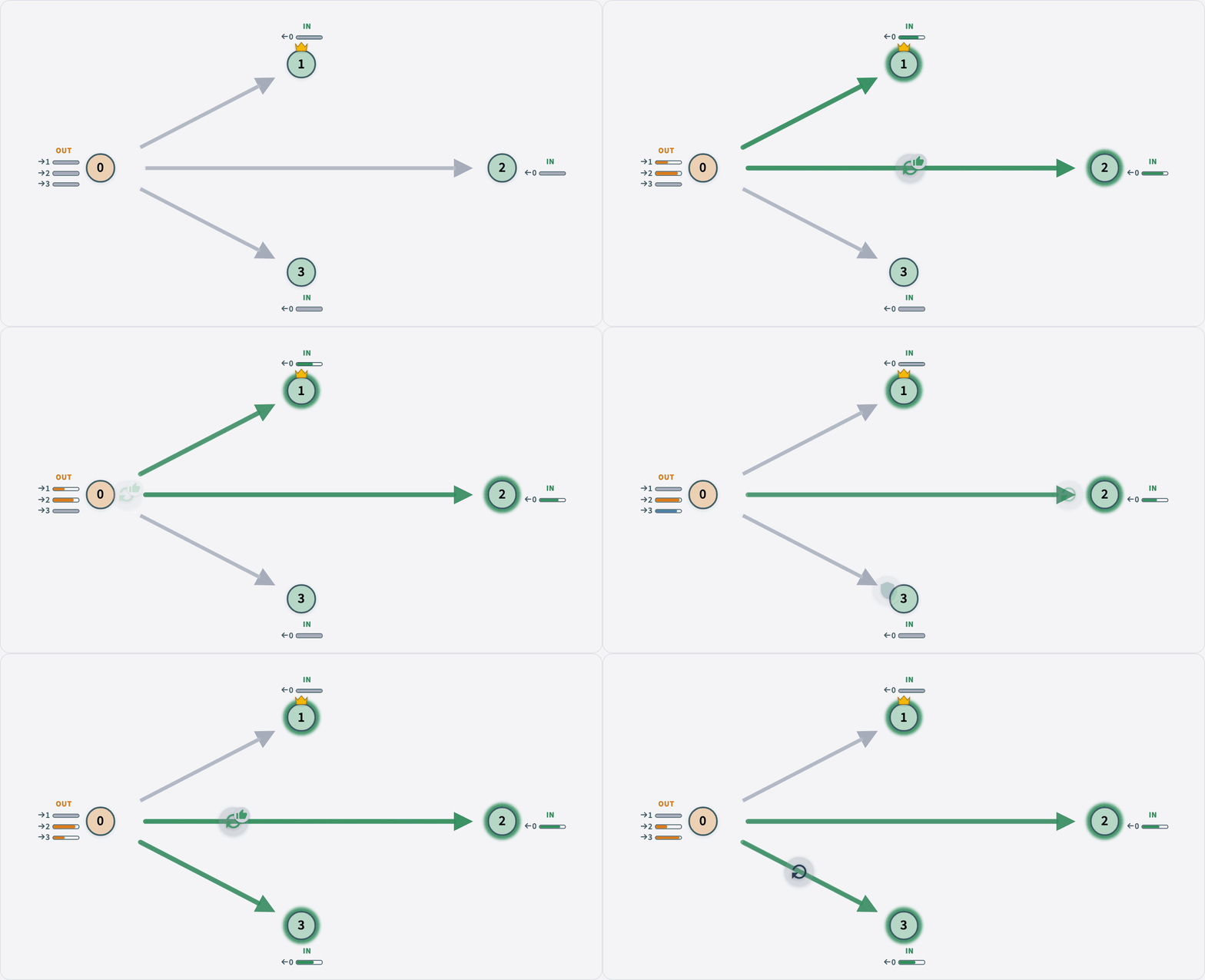
Distributed lock managers are a common example of application of this pattern. But, what about for consensus, how can leases help there?
03. Classic Leader Leases (all-to-one)
Every node acts as a grantor and leases the one node it thinks is leader (which may be self). A majority of those promises becomes a cluster-wide guarantee.
The primitive is unchanged – only the aggregate pattern. Each node grants to the latest leader it knows (after revoking any previous lease). Once a leader holds a majority number of grants (⌈n/2⌉, counting its own), it is provably the only one: the stable leader.
Two majorities must overlap, and the shared node never promises two leaders at once. Majority intersection, applied to leases.
Example – Every node leases their believed leader:
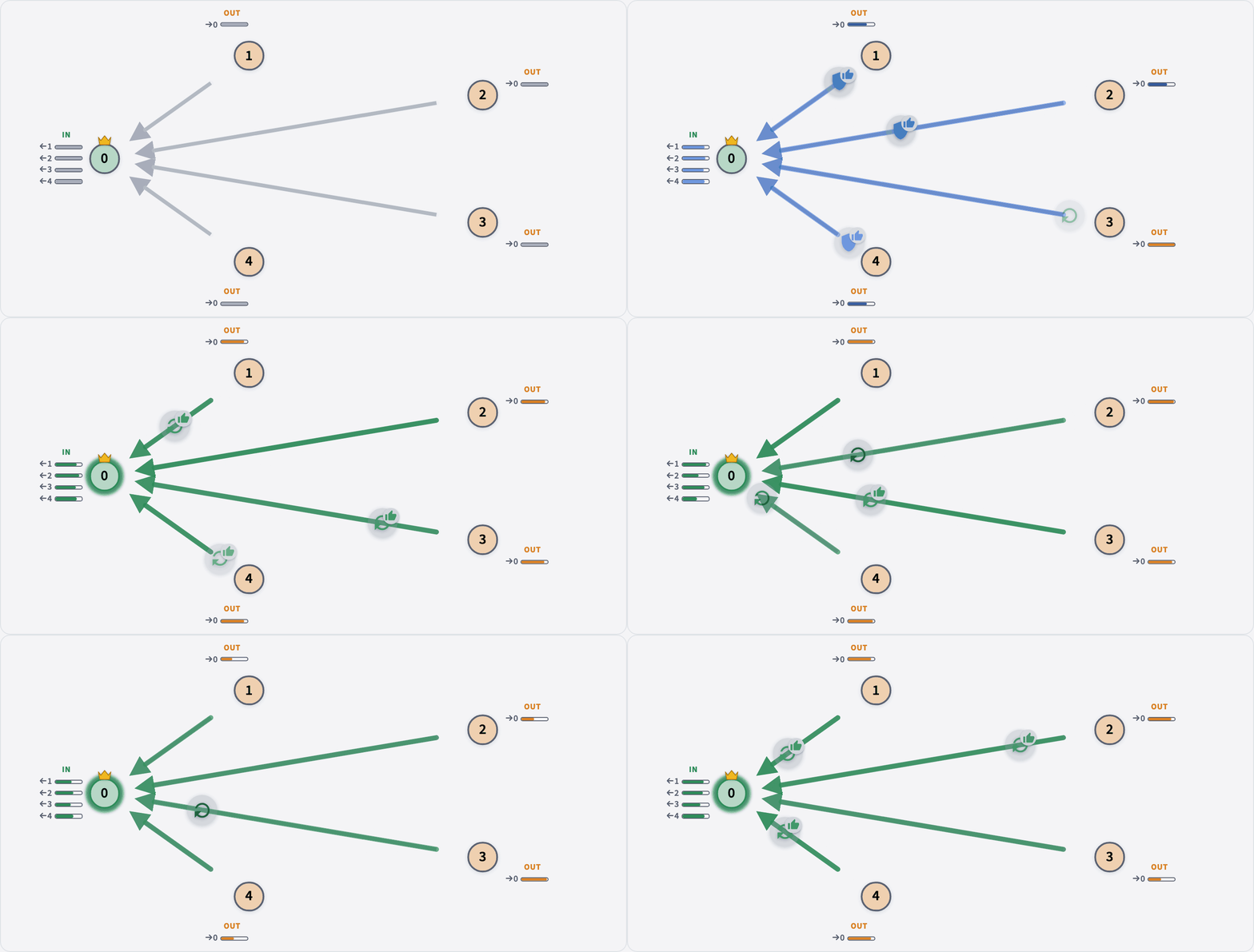
The payoff: the stable leader knows every latest commit, so it can serve reads from its local state directly – a linearizable read becomes a local check, not a network quorum.
However, this convenience is only at the leader, not at any other replica nodes that clients may be closer to. A big improvement to regular quorum-mandatory consensus reads nonetheless, but not exploiting clients’ location affinity fully.
- Pro: Leases sit off the critical path of consensus; writes never interrupt stable leadership.
- Con: Only leadership is protected, so only the sole stable leader acquires local read power.
04. Quorum Read Leases (all-to-many)
One local reader is limiting. Hand the privilege to any chosen subset of nodes instead – picked per object, so each object’s frequent readers can serve its reads locally 1.
The promise is new in kind – not “you are the leader” but “I won’t accept writes to this object without notifying you first and revoking” – a read lease. A grantee reads locally once a majority grant it ∧ its latest known write is in committed status; that write’s value can be used.
Example – A chosen subset of nodes hold read leases:
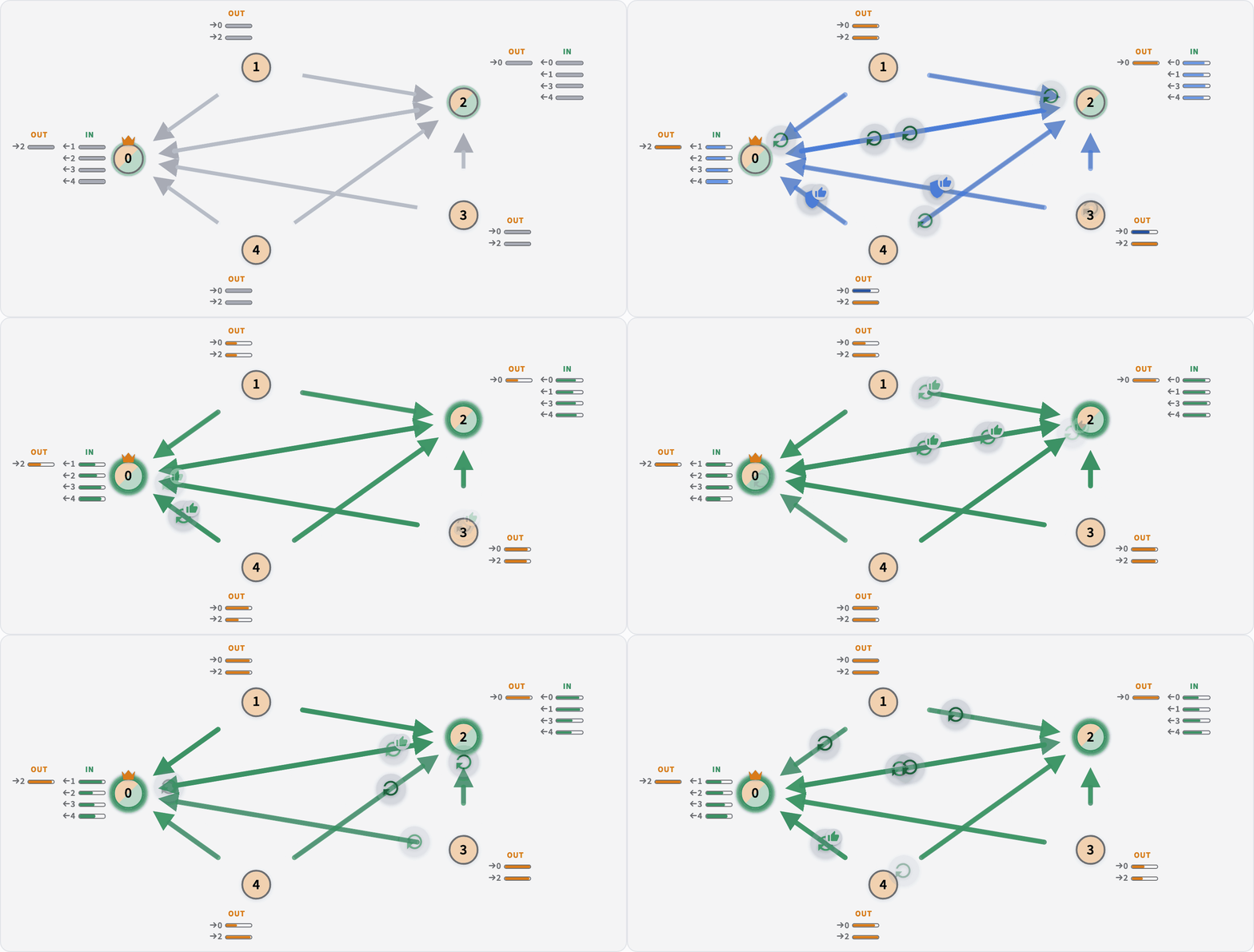
What happens upon a write? The trick: lease revocation rides the write’s accept messages. A write already needs a majority quorum; we include all the grantees in it as an additional requirement, and their ordinary accept-replies double as the lease revocation notification – no extra trip.
The downside of read lease semantic: any write to a leased object disrupts its local reads and tears the leases down, forcing re-establishment and causing local intervals of degradation.
Example – Write folds lease logic and disrupts read leases:
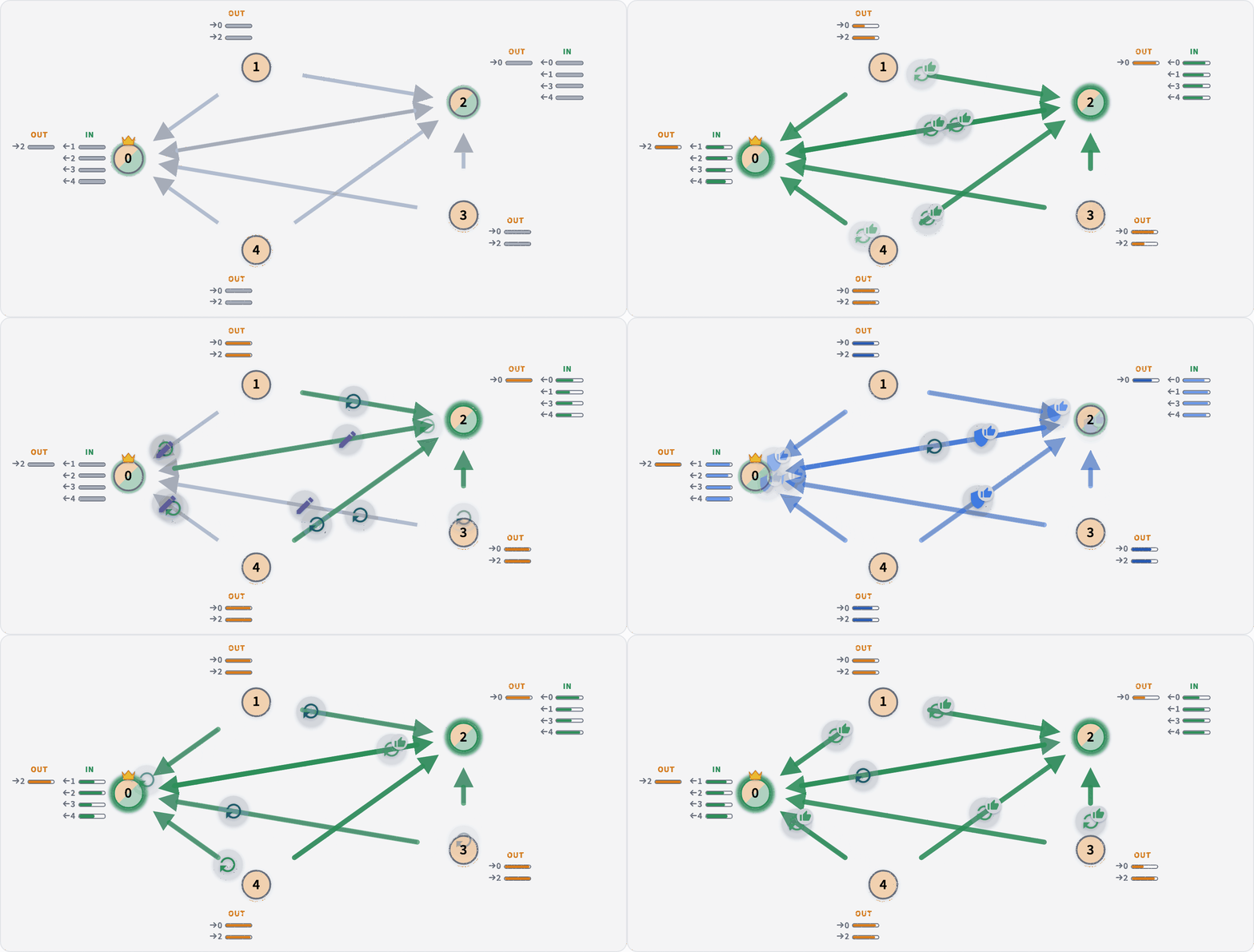
- Pro: Local reads possible at a a configurable subset of nodes, exploiting read locality.
- Con: Lease logic is coupled to consensus serving, and any write disrupts local reads.
05. Roster Leases: New, Simple, and Powerful (all-to-all)
The culminating pattern, simple but powerful. Decouple who takes part in leasing from what a lease protects. Everyone takes part, exchanging leases in an all-to-all pattern, via logical messages 2.
What the leases protect is a simple piece of cluster metadata – a roster: who is the leader ∧ who are the responders (i.e., local readers) per object. Roster is tagged by the ballot number as ⟨bal, ros⟩.
A lease now says “we agree on the roster”. Every node is both grantor and grantee, exchanging the primitive with every peer. Once a node holds a majority (⌈n/2⌉), that majority agrees on its ⟨bal, ros⟩ – so at most one such stable roster can exist, the precondition for local reads anywhere.
Being about metadata, the promise isn’t disrupted by writes. Reads can therefore go local anytime, not just in write-quiet windows.
Example – All-to-all leasing on a roster metadata:
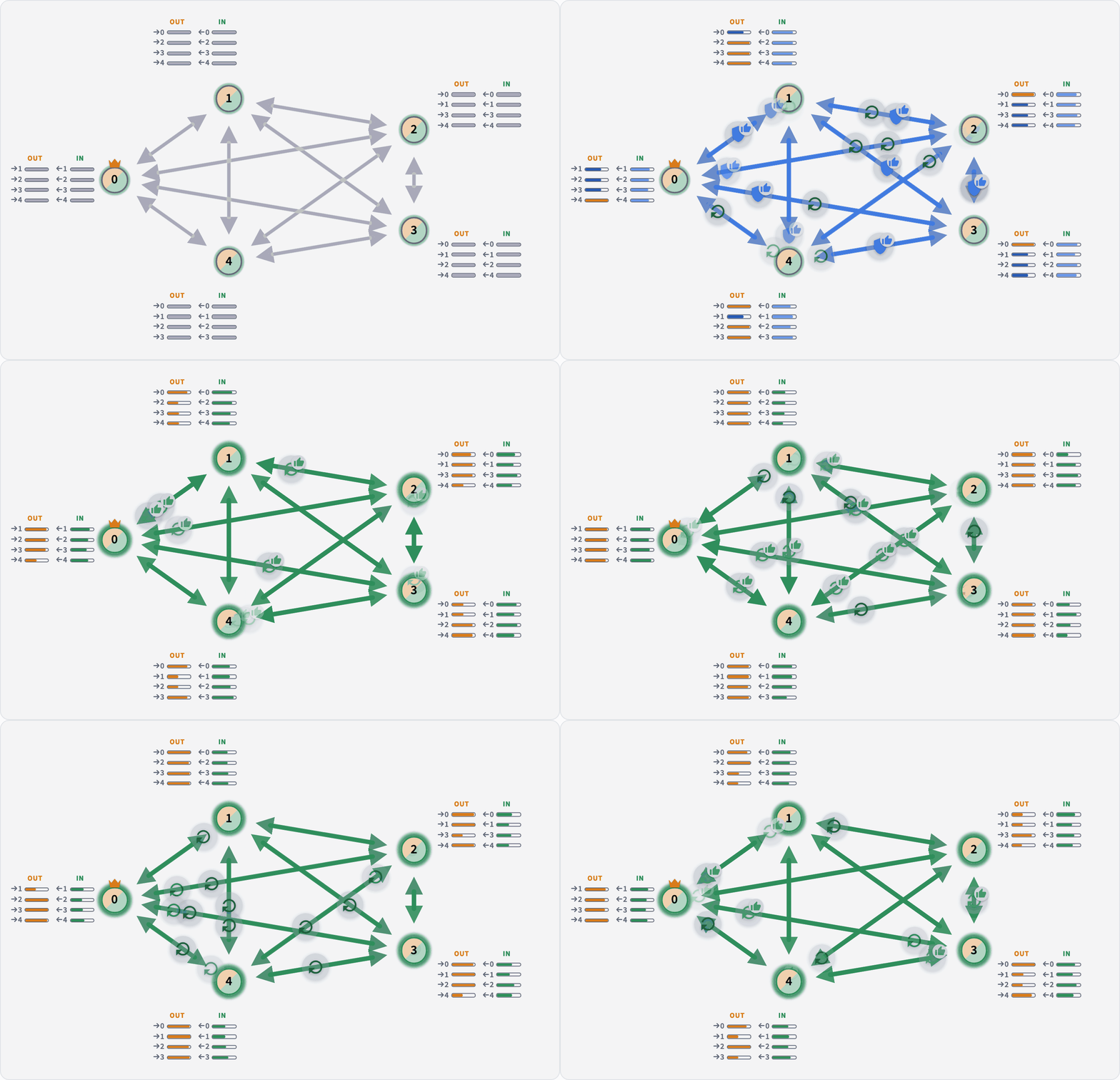
That decoupling is the philosophy, combining both pros and avoiding both cons. But roster leases is only half the story – the other half is how to integrate it with consensus with minimal tension. That co-design is Bodega.
06. Bodega: Roster Leases and Consensus Co-designed
Co-designs consensus serving around the roster. A responder serves reads locally if a majority grant it ∧ it is a responder according to the current roster ∧ its latest known write is in committed status. Write requires gathering accepts from responders and broadcasts commit notifications.
Reads stay local through writes. The lease traffic is nearly free too: it piggybacks on the heartbeats that consensus replicas already exchange.
Two more subtleties keep local reads honest and efficient:
- Latest slot not yet committed: Rather than an outright rejection, Bodega optimistically holds the read, anchors it on that slot, and answers it the moment it receives the commit notification for that slot (a bounded, often brief wait; the best strategy possible).
- A newly-joined responder doesn’t always have an up-to-date consensus log: Let each initial lease message carry the grantor’s highest accepted slot, so a responder starts localizing reads when its log has caught up to a sufficient point.
| Trait | First seen in |
|---|---|
| Bounded clock drift assumption only | One-to-one |
| Fault tolerance via self-healing expiry | One-to-one |
| Off the critical path leases on role (anytime) | Leader Leases |
| Configurable set of local readers (anywhere) | Quorum Leases |
| Decoupled leasing and consensus (anywhere, anytime) | Roster Leases |
| Efficiency via optimistic holding and more (co-design) | Bodega |
References
Comments welcome! 😉